




Here is something you probably hear over and over. Food bloggers are a friendly and fun group. I live in a city where there are so many good ones and I have had the good fortune to meet some wonderful people locally just through keeping a blog.
Also, just in the last year, I have had lunch with Stacey in New York, Erin in Boston, Allison in San Francisco, and Ele and Hilary in London. (Is it crazy ridiculous that I have traveled that much this year? This is not usually my life.) These are all women who, previous to our lunches, I had never met in person, just through their writing. In every single case, I was delighted with the women I met and look forward to a chance to see each and every one of them again.
When I mentioned to Ele and Hilary that I was coming to London for one day, they immediately responded that we should go to Ottolenghi for lunch. The restaurant is named after the owner who is originally from Israel. He has turned his amazing food and aesthetic into a thriving business with four locations and a weekly column in the Guardian. He himself is not a vegetarian but his column and his most recent cookbook is.
Periodically I have mentioned my imaginary Dana Treat restaurant. You know, the one that is only open from 10-3pm? The one where there I get to make whatever I want, change it up daily, where everyone loves my food and pays me well for it, and very nice magic fairies appear out of nowhere to do all the clean-up? That restaurant. Well, I would love my place to be a little like Ottolenghi.
Imagine. Clean white space. Big communal table and lots of little ones. Huge bowls of the daily sides and salads that the servers come and take from throughout lunch. Gorgeous and rustic sweets arranged just so – the kind you wish you had time to make yourself. I could learn a lot from Ottolenghi – we all could.
Fortunately, there is that cookbook! Actually there are two. I bought the brand new one, Plenty, while in San Fransisco and then Ele and Hilary bought me the first one at the end of our lunch (so sweet!). Please don’t ever quote me on this (and Randy! avert your eyes!) but I kind of feel like I could throw away all my other cookbooks and just cook out of these two books for the rest of my life. They are that good. Plenty is a wonder to behold. The look of the book, quality of the paper, and the photographs are enough to justify the price, but then the recipes! Swoon. All vegetarian and all sound amazingly delicious. The first book, Ottolenghi The Cookbook, features some meat and fish recipes but with plenty for the vegetarians and also has breads and sweets. I’ve started with this book.
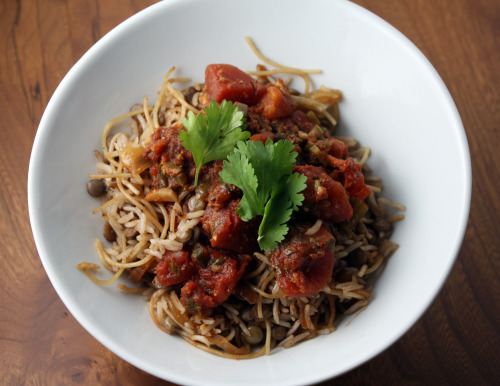
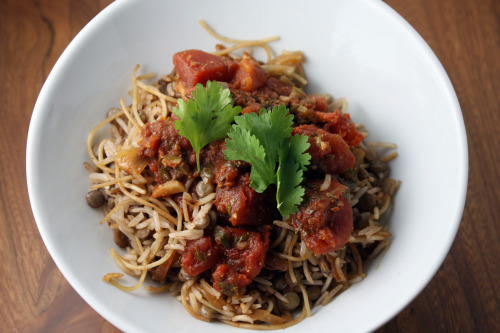
I have only been home for nine days, and already I have made three things from it. All amazing. This dish isn’t going to win any beauty contests but it was so incredibly tasty. Thin pasta, rice, caramelized onions, and lentils make for a very brown dish so I would highly recommend making the (very tasty) tomato sauce to top it. I don’t always like sweet flavors in my savory dishes, but the touch of cinnamon was most welcome here.
One Year Ago: Coconut Bars
Two Years Ago: White Beans with Roasted Tomatoes (still a fave, and yes, I made the same cake this year)
Kosheri
Adapted from Ottolenghi, The Cookbook
Serves 4-6
Being an English cookbook, all his measurements are in grams and milliliters. In addition to changing that, I also played a bit with the proportions a bit. I have found the Kitchen Pro app on my iPhone incredibly helpful. There are lots of components here but the onions and the sauce can be done days ahead of time.
1 cup lentils
1 heaping cup basmati rice
2 oz. angel hair pasta, broken in to 2-inch pieces
1 2/3 cups vegetable stock or water
½ tsp. grated nutmeg
1½ tsp. ground cinnamon
1½ tsp. salt
½ tsp. black pepper
4 tbsp. olive oil
Spicy Tomato Sauce
4 tbsp. olive oil
2 garlic cloves, minced
2 red hot chiles, seeded and finely diced (I used a jalapeño)
2 14-oz. cans diced tomatoes
1½ cups water
4 tbsp. cider vinegar
2 tsp. salt
2 tsp. ground cumin
¼ cup cilantro leaves, roughly chopped
Start with the sauce. Heat the olive oil in a saucepan, add the garlic and the chiles and fry for 2 minutes. Add the tomatoes, water, vinegar, salt, and cumin. Bring to a boil, then reduce the heat and simmer for 20 minutes, until slightly thickened. Remove the sauce from the heat, stir in the cilantro and then taste. See if you want more salt, pepper, or cilantro. Keep hot or leave to cool; both ways will work with the hot kosheri.
To make the kosheri, place the lentils in a large saucepan and then cover with cold water. Bring to a boil, then reduce the heat and simmer for about 20 minutes. The lentils should be tender but far from mushy. Drain in a colander and set aside.
In a large skillet with a tight-fitting lid, melt the butter over medium heat. Add the raw pasta, stir, and continue frying and stirring until the pasta turns golden brown. Add the rice and mix well until it is coated in the butter. Now add the stock or water, nutmeg, cinnamon, salt and pepper. Bring to a boil, cover, and then reduce the heat to a minimum and simmer for 12 minutes. Turn off the heat, remove the lid, cover the pan with a clean kitchen towel, and put the lid back on. Leave like that for about 5 minutes; this helps make the rice light and fluffy.
Heat the olive oil in a large frying pan, add the onions and sauté over medium heat for about 20 minutes, until dark brown. Transfer to paper towels to drain.
To serve, lightly break up the rice with a fork and then add the lentils and the onions. Taste for seasoning and adjust accordingly. Serve hot with the tomato sauce.


 Share
Share